
Brymen Digital Multimeters are designed for electrical work, electronics, automation, service and industrial maintenance. The range includes compact meters for everyday diagnostics as well as professional models with True RMS, AC+DC measurement, VFD functions, LoZ, high resolution and advanced recording features. When choosing a Brymen multimeter, consider not only measurement ranges and accuracy, but also the CAT rating, type of True RMS measurement and functions required for your work. Use the filters below to compare models and narrow the range to the instruments that match your application.

Multimeters
Multimeters

Multimeters
Multimeters
Multimeters

Multimeters
Multimeters

Multimeters
Multimeters

Multimeters
Multimeters

Multimeters
How to choose a Brymen digital multimeter
A digital multimeter should be selected for the measurements and working environment
in which it will actually be used. Accuracy and measurement range matter, but they are
only part of the decision. For professional work, the measurement category,
True RMS capability, behaviour with distorted signals and diagnostic functions can be
just as important.
Brymen offers digital multimeters for different levels of electrical and electronic work.
Compact models are suitable for everyday service and electrical measurements, while
more advanced instruments add functions intended for electronics, automation,
industrial maintenance and troubleshooting of electromechanical equipment.
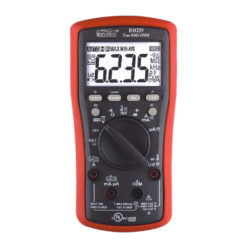
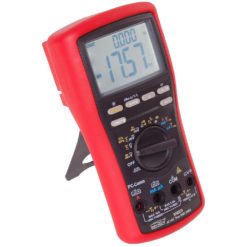
For example, the BM235 combines True RMS measurement with AutoV LoZ,
VFD measurement, non-contact voltage detection and Beep-Jack protection, making it
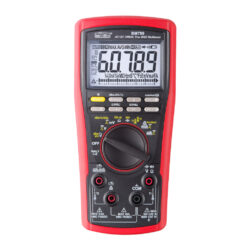
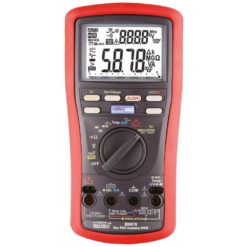
particularly relevant to electrical and field service work. Higher models such as the
BM789 add AC+DC True RMS, higher resolution, VFD, 4–20 mA process-loop
measurement, temperature measurement and recording functions for more advanced diagnostics.
True RMS, AC+DC and VFD – when do they matter?
True RMS becomes important when the measured waveform is not a clean
sine wave. This is common around electronic loads, power supplies, motor controls
and other modern electrical equipment.
Not every True RMS multimeter provides the same measurement functions. Selected
Brymen models also support AC+DC True RMS, which can be useful when a
signal contains both AC and DC components.
When working with variable-frequency drives, look for a dedicated
VFD function. It is intended for measurements in environments where
inverter output and switching signals can make conventional voltage readings more
difficult to interpret.
Important: True RMS and VFD functions are not interchangeable.
A meter should be selected according to the type of signal and the equipment being tested.
Check the CAT rating before choosing a multimeter
The maximum voltage shown in the specification does not tell the whole story about
electrical measurement safety. The measurement category – CAT II, CAT III or
CAT IV – relates to the electrical environment in which the instrument is
intended to operate and the transient energy it may encounter.
Choose the category according to the circuit and location where measurements will
be made. Test leads and other measurement accessories should also have ratings
appropriate for the same working environment.
Brymen multimeters are available with different measurement categories, so the CAT rating should always be checked for the specific model rather than treated as a general feature of the entire product range.
Resolution is not the same as accuracy
Display counts tell you how finely a multimeter can show changes in the measured value. They do not automatically mean that the instrument is more accurate.
A 6,000-count meter may be entirely sufficient for routine electrical measurements,
while higher-resolution instruments can be more useful in electronics, service work
and applications where smaller changes need to be observed.
For demanding measurements, compare resolution and specified accuracy
together rather than selecting a multimeter only because it has a higher
number of counts.
Which Brymen multimeter is suitable for your work?
Multimeters for electronics and service
For electronics and service work, useful parameters can include DC voltage accuracy, mV and µA ranges, fast continuity testing, capacitance, frequency measurement and higher display resolution.
Additional functions such as REL, MIN/MAX, AutoHold or AC+DC measurement can also improve diagnostic work when tracking changing or unstable signals.
Multimeters for electricians and field service
For electrical work, the measurement category, LoZ, voltage detection, continuity
response and protection against incorrect lead connection can be more important than maximum resolution.
Before choosing a model, check where the multimeter will be used: on electronic
equipment, final circuits, distribution systems or closer to the power source.
Multimeters for industrial maintenance and automation
In automation and industrial maintenance, functions such as VFD measurement,
AC+DC True RMS, MIN/MAX recording, Crest capture, temperature measurement or 4–20 mA current-loop measurement can make troubleshooting more efficient.
The right combination depends on the task. A meter with more functions is not
automatically the better choice if those functions are not relevant to the
measurements being performed.
When should you choose a different type of instrument?
A digital multimeter is not the right tool for every measurement. Before choosing
a model, consider whether another type of instrument would be more appropriate.
- If you need to measure current without opening the circuit, consider a
clamp meter. - If you need dedicated insulation resistance measurements, choose an
insulation tester or a multimeter designed for insulation testing. - If you need detailed harmonic analysis, long-term power monitoring or power-quality
diagnostics, a handheld multimeter does not replace a dedicated
power quality instrument.
Choosing the right instrument category is more important than trying to find one
multimeter for every possible measurement task.
Brymen Europe support
If you are comparing several Brymen multimeters and are unsure which measurement functions or safety category are appropriate for your application, Brymen Europe can help with model selection, technical documentation and available after-sales support.
Frequently asked questions about Brymen multimeters
What is the difference between a standard multimeter and a True RMS multimeter?
A True RMS multimeter is designed to determine RMS values more accurately when the measured waveform is not a pure sine wave. This can matter when working with electronic loads, power supplies, motor drives and other equipment that produces distorted signals.
Which Brymen multimeter should I choose for electrical work?
Start with the measurement category required for your working environment.
Then compare functions such as LoZ, voltage detection, continuity testing,
True RMS and VFD measurement. The required combination depends on the circuits and equipment you work with.
Do I need AC+DC True RMS?
Not for every application. AC+DC measurement becomes relevant when a signal
contains both AC and DC components and you need to evaluate their combined RMS value. For standard electrical measurements, conventional AC True RMS may be sufficient.
Is a higher number of counts always better?
No. More counts increase display resolution, but resolution is not the same as
measurement accuracy. Both parameters should be evaluated together and matched to the application.
Can a Brymen multimeter be used with variable-frequency drives?
Selected Brymen multimeters include a dedicated VFD function intended for work
with variable-frequency drives and motor control systems. Check the specification
of the individual model before choosing it for this type of measurement.
What CAT rating should a professional multimeter have?
There is no single CAT rating suitable for every job. The required measurement
category depends on where in the electrical installation the measurement is being
made. Always check the CAT rating of both the multimeter and the test leads against the intended working environment.