
Brymen clamp meters allow current measurement without opening the circuit and include
models for electrical work, industrial maintenance, automation and power diagnostics.
Depending on the application, you can choose between AC and AC/DC current measurement,
True RMS, VFD functions, inrush current capture and additional multimeter functions.
When comparing models, check the current range, jaw size, measurement category and
diagnostic functions required for your work.
Clamp meters
Clamp meters
Clamp meters

Clamp meters
1000V
Clamp meters
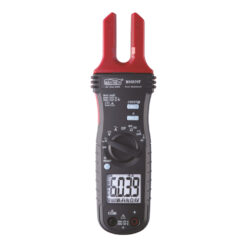
Clamp meters

Clamp meters
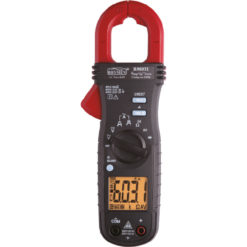
Clamp meters
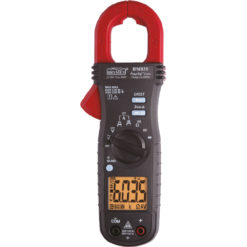
Clamp meters

Clamp meters
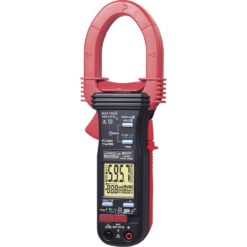
Clamp meters
1000V
CAT III
1500V
Clamp meters
How to choose a Brymen clamp meter
A clamp meter is designed to measure current without disconnecting the conductor or opening the electrical circuit. This makes it particularly useful for electrical installation work, industrial maintenance, automation and troubleshooting where current needs to be checked quickly and with minimal interference in the circuit.
Brymen clamp meters cover different types of measurement tasks, from compact meters for routine AC current measurements to more advanced instruments with AC/DC True RMS, VFD measurement, inrush current capture, temperature measurement and power analysis.
The right model should be selected according to the current type and range, conductor size, measurement category and the additional diagnostic functions needed for the job. A higher maximum current range is not automatically an advantage if the meter is not suited to the signals and conductors you actually work with.
AC or AC/DC clamp meter?
One of the first decisions is whether you need to measure only AC current or both AC and DC current.
An AC clamp meter can be sufficient for many conventional electrical installations and mains-powered loads. AC/DC current measurement becomes important when working with batteries, DC power systems, automotive circuits, renewable energy systems, DC drives or other equipment where direct current is present.
Before choosing a model, check not only its maximum current range but also whether the clamp measurement itself supports AC, DC or both.
True RMS – when does it matter in a clamp meter?
True RMS is important when current or voltage waveforms are distorted rather than purely sinusoidal. Such conditions are common around electronic loads, switching power supplies, variable-frequency drives and modern industrial equipment.
In these environments, a True RMS clamp meter can provide a more useful measurement than a meter designed primarily for clean sinusoidal signals.
Selected models also provide AC+DC True RMS, which can be relevant when the measured signal contains both alternating and direct-current components. This is a more specialised requirement and is not necessary for every electrical job.
Inrush current and motor diagnostics
Motors, transformers, compressors and other inductive loads can draw substantially more current during start-up than during normal operation. A clamp meter with an appropriate inrush or peak capture function can help identify these short-duration current events.
This can be useful when diagnosing nuisance protection trips, difficult motor starts or unusually high start-up loads.
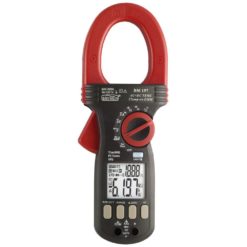
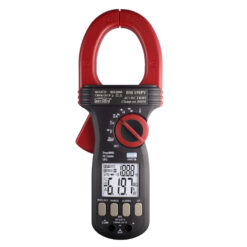
For example, the BM197 combines AC/DC current measurement up to 2000 A with AC+DC True RMS, VFD voltage and frequency measurement and a Crest function for capturing short-duration current events.
Clamp meters for VFD and variable-speed drives
Measurements around variable-frequency drives require more attention than conventional mains measurements. Switching signals and distorted waveforms can affect the usefulness of readings from a basic meter.
If you work with motor drives, check whether the clamp meter provides a dedicated VFD function or appropriate filtering. These functions are intended to improve measurements in environments where inverter output can otherwise make voltage and frequency readings more difficult to interpret.
A VFD function does not replace a power quality analyser or oscilloscope when detailed waveform or harmonic analysis is required. It should be treated as a diagnostic function for specific electrical measurements rather than a complete drive-analysis tool.
Current range and jaw size
Maximum current is only one part of clamp meter selection. The physical size of the jaws also determines whether the instrument can be used on the conductors found in your application.
Smaller jaws can make access easier in crowded panels and around smaller conductors, while larger jaws are useful for high-current installations with larger cables. For industrial applications, compare the maximum conductor diameter together with the current measurement range.
A meter designed for very high current is not automatically the best choice for lower-current diagnostic work. Resolution and the intended measurement range also need to match the task.
Leakage current requires the right clamp meter
A standard clamp meter intended for measuring tens, hundreds or thousands of amperes should not automatically be treated as a leakage-current meter.
Leakage-current measurements require suitable low-current resolution and a measurement system designed for this purpose. If earth leakage or very small differential currents are the main task, check the specification of the individual model rather than relying only on the fact that it uses clamp jaws.
Check the CAT rating and working environment
Current range alone does not determine whether a clamp meter is suitable for a particular electrical environment. The measurement category – CAT II, CAT III or CAT IV – should also be checked before selecting an instrument.
The required category depends on where the measurement is performed within the electrical installation. Test leads used for voltage, resistance or other contact measurements should also have ratings appropriate for the same environment.
Brymen clamp meters are available with different measurement categories, so the CAT rating and category voltage should always be verified for the specific model.
Additional multimeter functions
Many clamp meters provide more than current measurement. Depending on the model, additional functions can include voltage, resistance, continuity, frequency, capacitance, temperature and non-contact voltage detection.
These functions can make one instrument useful for a broader range of troubleshooting tasks, especially in field service and industrial maintenance. However, the decision should still start with the primary measurement task rather than the total number of functions.
Clamp meters for power and three-phase diagnostics
Some models extend beyond conventional current measurement and provide functions intended for power diagnostics.
The BM099 supports measurements including active, reactive and apparent power as well as harmonic and distortion parameters. The BM157s provides power measurements for balanced and unbalanced three-phase loads together with energy recording functions.
These functions can be useful when power is part of the diagnostic task, but they should not be confused with the capabilities of a dedicated power quality analyser used for detailed or long-term network analysis.
Clamp meter or digital multimeter?
A clamp meter and a digital multimeter solve different measurement problems. The main advantage of a clamp meter is the ability to measure current without disconnecting the conductor.
A conventional digital multimeter may be more suitable when high resolution, low-current measurements or detailed voltage and resistance diagnostics are the priority. In many professional applications, the two instruments complement each other rather than replace one another.
If current measurement is one of your main daily tasks, a clamp meter is usually the more practical starting point. If current is measured only occasionally and detailed electrical or electronic measurements are more important, compare the available digital multimeters instead.
Brymen Europe support
If you are comparing several clamp meters and are unsure which current range, measurement category or diagnostic functions are appropriate for your application, Brymen Europe support can help with model selection, technical documentation and available after-sales support.
Frequently asked questions about Brymen clamp meters
What is a clamp meter used for?
A clamp meter allows current to be measured by placing the jaws around a conductor, without disconnecting the circuit. Depending on the model, it may also measure voltage, resistance, frequency, temperature and other electrical parameters.
What is the difference between an AC and an AC/DC clamp meter?
An AC clamp meter measures alternating current. An AC/DC clamp meter can also measure direct current, which is useful for batteries, DC power systems, renewable energy installations and other applications where DC current is present.
When do I need a True RMS clamp meter?
True RMS becomes important when the measured current or voltage is not a clean sine wave. This is common with electronic loads, switching power supplies, variable-frequency drives and other equipment that produces distorted waveforms.
Can a clamp meter measure inrush current?
Selected clamp meters provide an inrush or peak capture function designed to measure short-duration current increases during the start-up of motors, transformers and other inductive loads. Check the individual model specification if this type of measurement is required.
Can a clamp meter be used with variable-frequency drives?
Selected Brymen clamp meters provide dedicated VFD measurement functions. These are useful when working with variable-frequency drives, where switching signals and distorted waveforms can make conventional measurements more difficult to interpret.
Can every clamp meter measure leakage current?
No. Leakage-current measurement requires suitable low-current resolution and specifications intended for that type of measurement. A high-current clamp meter should not automatically be considered suitable for leakage-current testing.
Is a clamp meter better than a digital multimeter?
Neither is universally better. A clamp meter is more convenient when current needs to be measured without opening the circuit. A digital multimeter can be better suited to detailed voltage, resistance and lower-current measurements. The choice depends on the work being performed.
What CAT rating should a clamp meter have?
There is no single CAT rating suitable for every application. The required measurement category depends on the location within the electrical installation and the expected transient environment. Always check the rating of the individual clamp meter and its test leads before use.